
In the contract decorating business, few things are more costly than a reprint.
Beyond the obvious cost of replacing garments, reprints consume:
- Labor hours
- Production capacity
- Materials
- Scheduling bandwidth
A mistake on one job can create a ripple effect that delays multiple orders behind it.
Reprints are often treated as unavoidable costs of doing business, but they don’t have to be.
While some issues are outside a shop’s control—like damaged goods from suppliers or last-minute customer changes—many of the most common causes of reprints originate inside the operation itself.
The good news is that many of these problems can be prevented through stronger processes and greater consistency.
Here are five things to keep in mind to help you avoid reprints.

1. Make Sure You Have All the Info
Production errors often begin before a shirt ever reaches the press. Inconsistent information becomes guesswork in production.
Missing placement details, incorrect garment colors, outdated artwork versions, or unclear customer instructions create opportunities for mistakes throughout the production process. A small communication issue made during order entry can quickly become hundreds of incorrectly decorated garments.
Contract shops handling work from brokers or multiple clients process large amounts of information daily—they’re particularly vulnerable to this kind of error.
The solution: Before an order enters production, lock in the critical details about garment style, quantity, decoration placement, thread and ink colors, artwork approvals, and special instructions. Standardized order forms and pre-production checklists can significantly reduce risk.

2. Test, Test, Test
Not all garments behave the same way, and assumptions can be costly.
Different fabric blends, moisture-wicking materials, performance apparel, and specialty fabrics can create unexpected decorating challenges.
Ink migration, dye bleeding, scorching, adhesion problems, or inconsistent embroidery results often occur when shops assume a new garment will react like previous products.
This becomes increasingly important as customers expand into performance wear and fashion-forward retail styles.
The solution: Testing garments before full production may feel like an extra step, but it helps prevent larger issues later. Running wash tests, checking cure temperatures, or decorating sample pieces allows shops to identify problems before they affect an entire order.

3. Don’t Skip the Press Check
There can be pressure to move jobs onto equipment as quickly as possible during busy production periods. Shops trying to gain a few extra minutes sometimes reduce press checks or rush setup procedures.
Those decisions can become expensive.
A small registration issue, color variation, embroidery alignment problem, or placement error may not seem significant on the first garment. But if the issue isn’t identified early, the same mistake can repeat across an entire order.
The solution: Make quality checks an essential part of your production process. A few minutes spent reviewing the first pieces off the press can prevent hours of rework later.
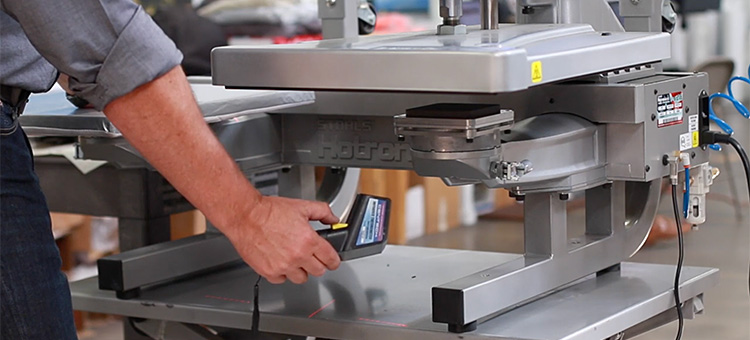
4. Implement Consistent Operator Procedures
Even shops with top-of-the-line equipment can struggle when procedures vary from one operator to another.
One employee may use different setup methods, tension settings, ink adjustments, or quality standards than another. Over time, these inconsistencies create variability and increase the likelihood of mistakes. Consistency matters as much as speed.
The solution: Remove as much subjectivity as possible from production tasks. Document standard operating procedures to create regular processes across shifts and employees. Provide training materials, setup guidelines, and written quality standards to ensure production consistency regardless of who’s operating the equipment.

5. Check Quality at Every Step
Errors become more expensive the farther they travel through production.
Some shops rely heavily on final inspection to identify problems. But waiting until completed garments reach the inspection table can mean discovering issues far too late.
The solution: Think of quality control less as a final exam and more as a system of checkpoints that exists throughout the process. Artwork review, setup verification, production checks, and finishing inspections create multiple opportunities to catch issues before they become large-scale problems.

Preventing Reprints Saves Time and Money
Every production environment involves people, equipment, and variables that can’t always be controlled. Reprints will never disappear completely.
But many of the most common causes are preventable.
For contract decorators, reducing reprints isn’t simply about avoiding mistakes. It empowers them to protect production time, improve profitability, and preserve customer confidence.
In a business where both margins and schedules are often tight, preventing one major reprint may well be the factor that allows a decorator to take on additional work, or simply enjoy the rewards of a job well done.
If you’d like to learn more ways to run your contract decorator business more efficiently, the Decorator Solutions team is here to help! Reach out any time with questions or to schedule a consultation.