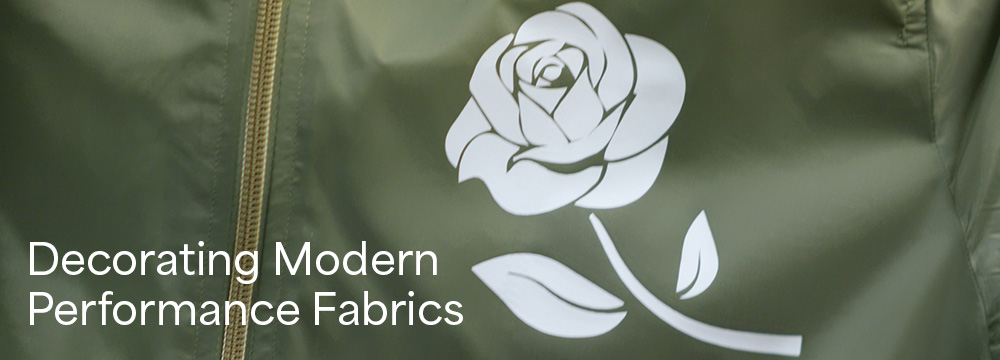
Performance apparel has exploded in popularity over the last 15 years. From uniforms and leggings to lightweight jackets and compression wear, this category has evolved with new complex fabrications focused on comfort, flexibility, and durability.
In short, nylon and spandex have entered the chat. No matter what technique you’re using, understanding how these fabrics behave and how you can work with them are the key to producing professional, long-lasting results.
Let’s take a closer look at both, so you know how to decorate them like a pro. In this article, we’ve also covered the three most popular decoration techniques, so you can skip ahead to the one you’re curious about.

The New Fabrics of Performance
Like their synthetic cousin polyester, both nylon and spandex are highly sensitive to heat, if not more so. However, they also have their own unique set of challenges for decorators.
Nylon is smooth and non-porous. Traditional transfer adhesives and screen printing inks do not naturally adhere to it without assistance.
These standard consumables rely on a physical grip around rough fibers, but nylon’s tight surface prevents this mechanical bond—logos will easily peel, scratch, or rub off without a chemical cross-linking agent.
Spandex complicates the situation with its extreme stretch and recovery. This leads to an increase in puckered embroidery and prints that crack and split almost immediately if caution is not applied during the decoration process.
As always, test your process multiple times to avoid costly production mistakes.
Screen Printing
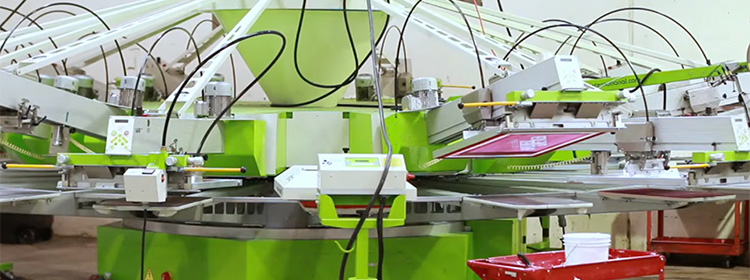
Screen printing remains one of the most popular decoration methods for performance apparel. Success depends largely on minimizing heat exposure and selecting the proper ink system.
- Use low-cure inks to ensure that the fabric is not exposed to a temperature that would otherwise compromise its integrity. Inks that cure between 260-280°F are a must to greatly reduce the possibility of heat damage to these sensitive fabrics.
- Take proper precautions to ensure that the garment is a safe distance away from a quartz flash (if needed). Flash temps should not exceed 250 degrees, and the ink should reach a state where it is gelled, not cured, during the flashing process.
- Watch closely for signs of overheating, including:
- Glossy fabric surfaces
- Shrinkage
- Warping
- Loss of stretch
- Heat damage around seams
- After curing, stretch-test the print to confirm that it flexes naturally with the garment without cracking or lifting.
When working with nylon or spandex, it’s crucial to incorporate special additives during production.
- Nylon fabrics require a bonding catalyst to prevent poor ink adhesion, because traditional plastisol inks will not naturally grip the fabric. The general rule of thumb is to incorporate 10% catalyst into each ink color—less may not achieve optimal adhesion, while too much catalyst can reduce color opacity.
- Spandex fabrics typically require the use of a stretch additive. This agent will allow the inks to move with the product as it expands and recovers during the wear and wash cycle.
For apparel that includes both nylon and spandex, both additives should be incorporated into the decoration process.
Other Screen Printing Considerations
- Silicone inks have become the industry standard for maximum flexibility on high-stretch fabrics. These inks stretch exceptionally well, maintain a soft, retail feel and resist cracking even under repeated movements.
- Use minimal off-contact, a sharp 70-durometer squeegee, and moderate pressure to deposit ink cleanly without overworking and distorting the fabric. Excessive off-contact or heavy squeegee pressure can stretch the fabric during production, leading to registration issues and inconsistent prints.
A final, critical note: never allow garments to fall into a catch-bin following curing, and make sure the fabrics are adequately cooled down prior to stacking.
Failure to follow this last step will trap the ink between layers of warm fabric, causing ghosting or increasing the possibility of dye migration.
Embroidery
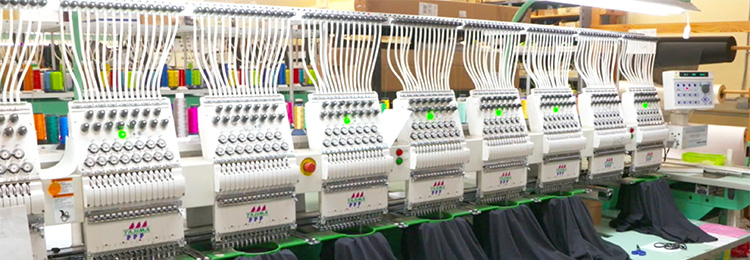
Embroidery is always reliable for offering excellent durability with a premium look. However, the elasticity of modern performance wear does require careful digitizing and stabilization. The properties of your digitized embroidery file, backing material, needles and thread choice are all important factors.
- Keep stitch density as low as possible. While standard digitizing procedures work on heavier, flat fabrics, reducing stitch density is of the utmost importance when it comes to embroidery on modern performance wear. This will minimize puckering and will allow the garment to stretch naturally.
- Avoid large, solid fill areas, when possible. Smaller logos with balanced stitch density generally produce cleaner, more comfortable results.
- Choose the appropriate backing material for these fabrics.
- Cut-away stabilizers and performance backing generally provide the best support while allowing the garment to retain its flexibility.
- Using a three-layer stabilizer recipe is highly recommended. This includes two layers of woven performance backing, with one layer offset 45 degrees to resemble a six-pointed star. On top of these layers, place a 2oz layer of cutaway backing against the garment to create a smooth surface.
One of the most common embroidery mistakes on high-stretch fabrics is over-hooping. Stretching the garment tightly inside of the hoop may seem beneficial, but it often leads to puckering and permanent distortion once the hoop is removed. Instead, when possible, use magnetic hoops to minimize stretching during production.

Heat Transfer
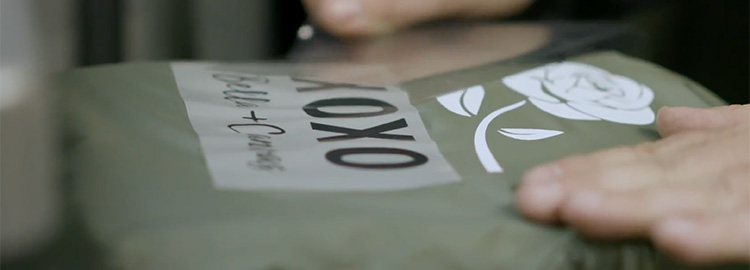
Heat-applied graphics offer flexibility for personalization and shorter production runs. On modern performance fabrics, you’ll want to keep a close eye on temperature and pressure, and you might need specialized equipment or transfers.
- Watch your temperature. Most modern transfers apply successfully at 290°F, with some reaching a full cure and application at closer to 260 to 270°F. This reduces the risk of damaging these more sensitive fabrics.
Best practice: Start with the lowest temperature and dwell time recommended by the transfer manufacturer.
- Adjust your pressure. Medium pressure will usually do the trick—too much can leave unwanted press marks and potentially flatten the fabric texture.
- Cover your platen. Using an upper platen cover (such as Teflon or a silicone pad) is highly recommended to protect these fabrics from direct platen contact, reducing the possibility of a sheen change to the color of the garment.
- Consider pillows or pads. If there are raised elements of the garment near the decoration area—seams, zippers, pockets, thick stitching, or buttons—make sure to use a heat press pillow so that the application surface is smooth and free of raised elements that would create uneven pressure.
If the decoration area is small, a heat press pad could be used to raise the decoration area up and away from these uneven elements.
- Use the right transfer for the job. Modern Direct-to-Film transfers have very high stretch capabilities—most will adhere and move nicely with spandex fabrics. The standard Thermoplastic Polyurethane (TPU) adhesives found on many DTF transfers will likely not have the grip required to bond to the non-porous of nylon.
If nylon is part of the equation, then transfers are likely going to be limited to options that have an ultra-aggressive adhesive. These transfers perform similarly to a bonding agent for screen printing, carrying the cross-linking agent that will help a decorator find more success when heat pressing on nylon substrates.
Silicone transfers are also a great option to consider for a more retail, premium look.
Welcome to the Big Leagues
Decorating modern performance apparel that incorporates unique fabrication, such as nylon and/or spandex, requires a different approach than decorating traditional polyester garments. Success depends on understanding the fabric’s unique characteristics and adjusting your production methods accordingly.
Testing the process is essential for success. Production should only begin when there is complete confidence that all concerns have been addressed.
With careful preparation, the right materials, and attention to heat management, decorators can consistently produce professional-quality graphics that adhere and move with the garment, withstand repeated wear, and maintain their appearance over time.
If you have any more questions about performance fabrics, contact the Decorator Solutions team. We’re here to help!